Cat Enrichment Ideas: Play, Puzzles, Climbing & More
How do I create enrichment for my cat?
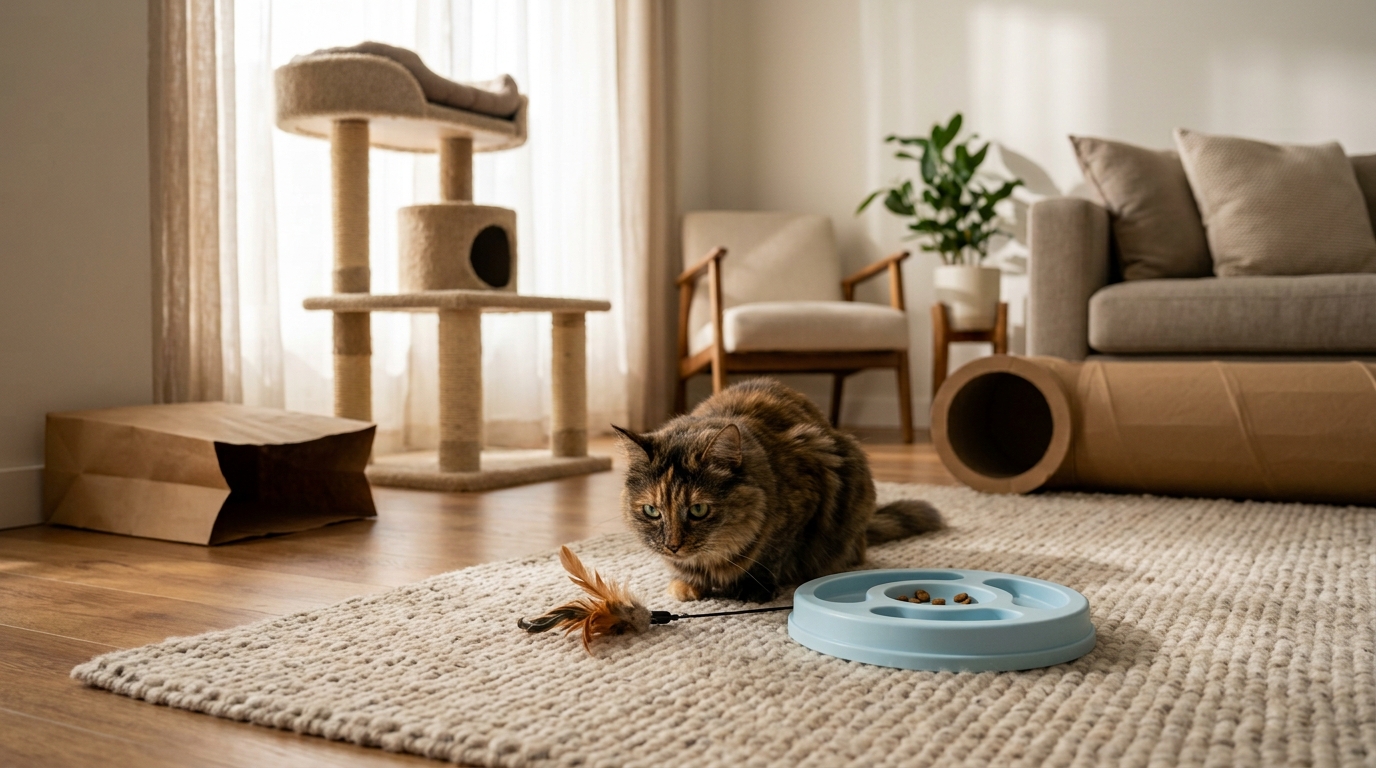
Cat enrichment is about giving your cat safe ways to do “cat things”: hunt, climb, scratch, explore, and rest in secure spots. The best setups mix physical activity, mental puzzles, and changes in the environment so your cat stays curious without feeling overwhelmed.
Build a “hunt, catch, eat” routine
Use wand toys, small toss toys, or a laser pointer (always end with a toy your cat can grab). Aim for two short play sessions daily (5–15 minutes). Let your cat stalk, pounce, and “win,” then offer a small meal or treat to complete the natural sequence and reduce frustration.
Add vertical space and cozy observation points
Cats feel more confident when they can climb and survey their territory. Provide a cat tree, wall shelves, or a stable window perch. If you’re short on space, even a cleared dresser top with a non-slip mat and a bed can become a favorite lookout.
Make scratching and scent-marking easy
Place scratching posts and pads where your cat already likes to scratch—often near sleeping areas and room transitions. Offer both vertical and horizontal options. Rotate materials (sisal, cardboard, carpet-style) to keep it interesting and to protect furniture.
Use food puzzles and foraging
Swap part of your cat’s daily kibble for puzzle feeders, treat balls, or simple “snuffle” setups (treats hidden under cups or in a towel fold). Start easy so your cat succeeds quickly, then gradually increase the challenge.
Rotate novelty without chaos
Instead of leaving every toy out, keep a small selection available and switch them weekly. Add low-stress new experiences like paper bags (handles removed), boxes, cat-safe tunnels, or a sprinkle of catnip or silvervine for variety.
For more practical ideas and product-friendly options, visit the main guide on cat enrichment.
FAQ
What are signs my cat is bored?
Common signs include frequent vocalizing for attention, over-grooming, destructive scratching, or sudden bursts of “zoomies” with no outlet. Some cats also sleep excessively or seem clingy because they’re under-stimulated.











Leave a comment